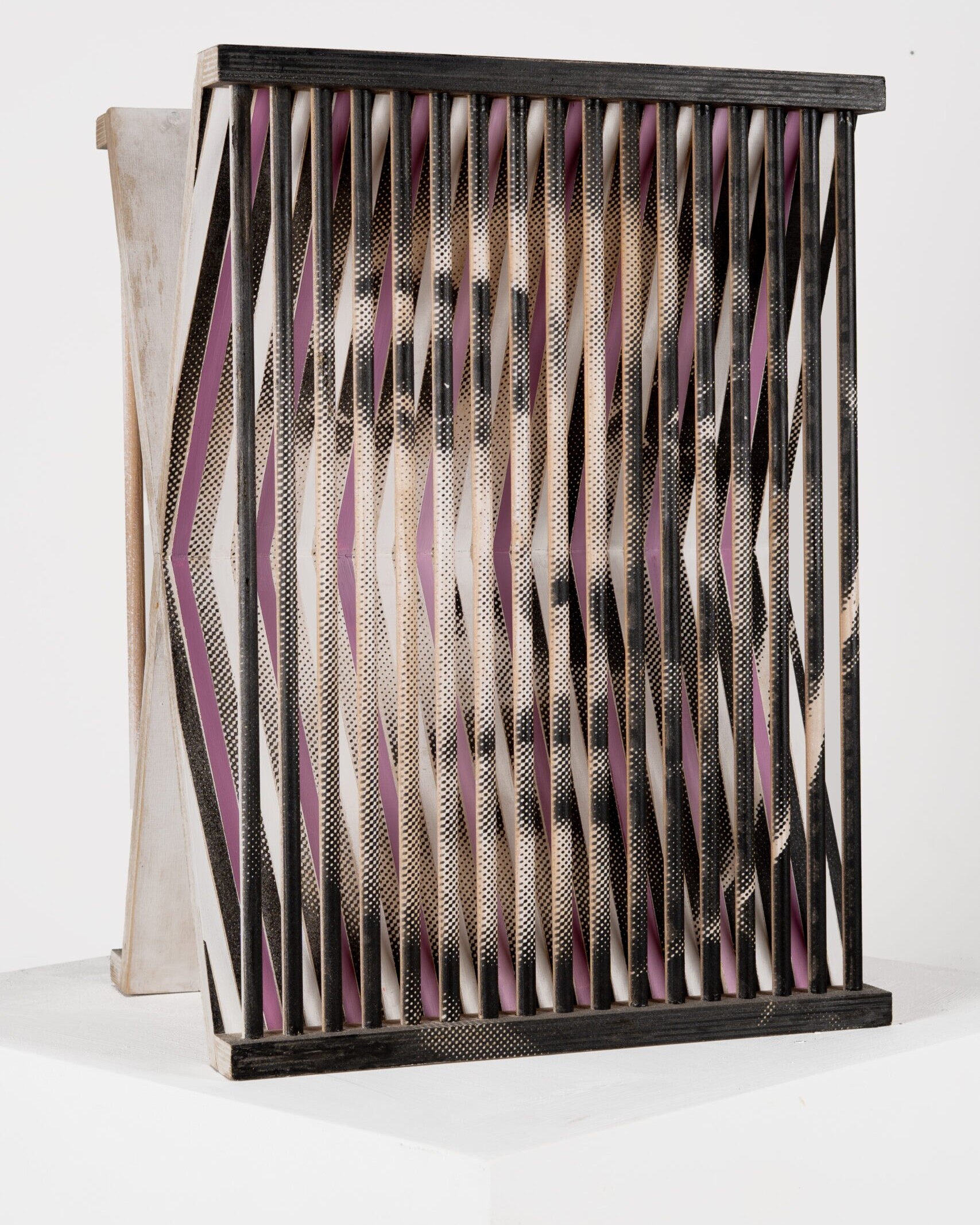
ILSE HAIDER “ICONS”
Famous faces – and yet always something enigmatic, unspoken in their gaze, in their expressions; this is how the portrait studies, translated into sculpture by media artist Ilse Haider, reveal their ambivalent side. She takes her subjects from published media, star photos of fashion icons, actors, world-famous intellectuals – and yet something unsettles the rapid identification, something disrupts the superficial consumption of images.
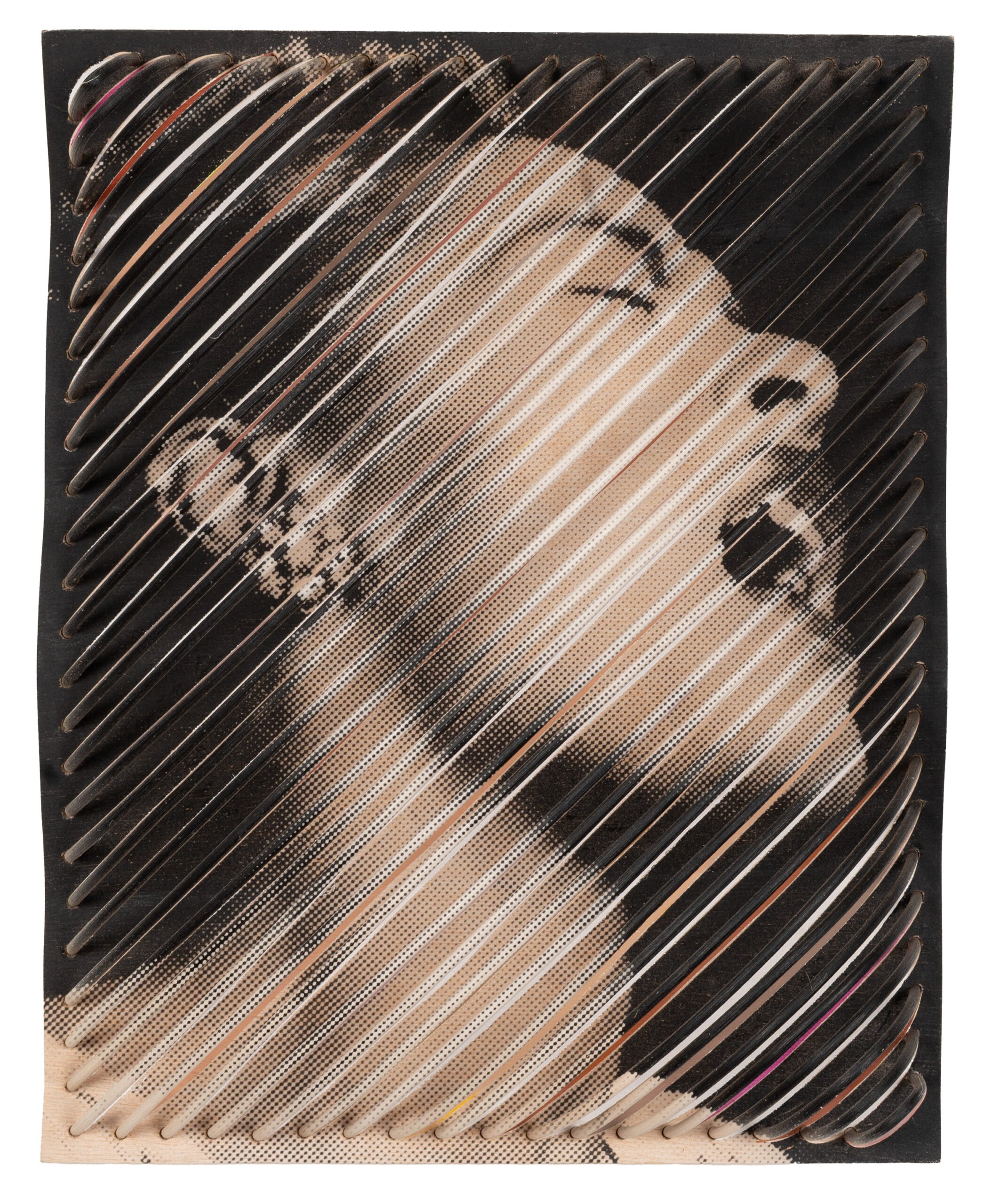
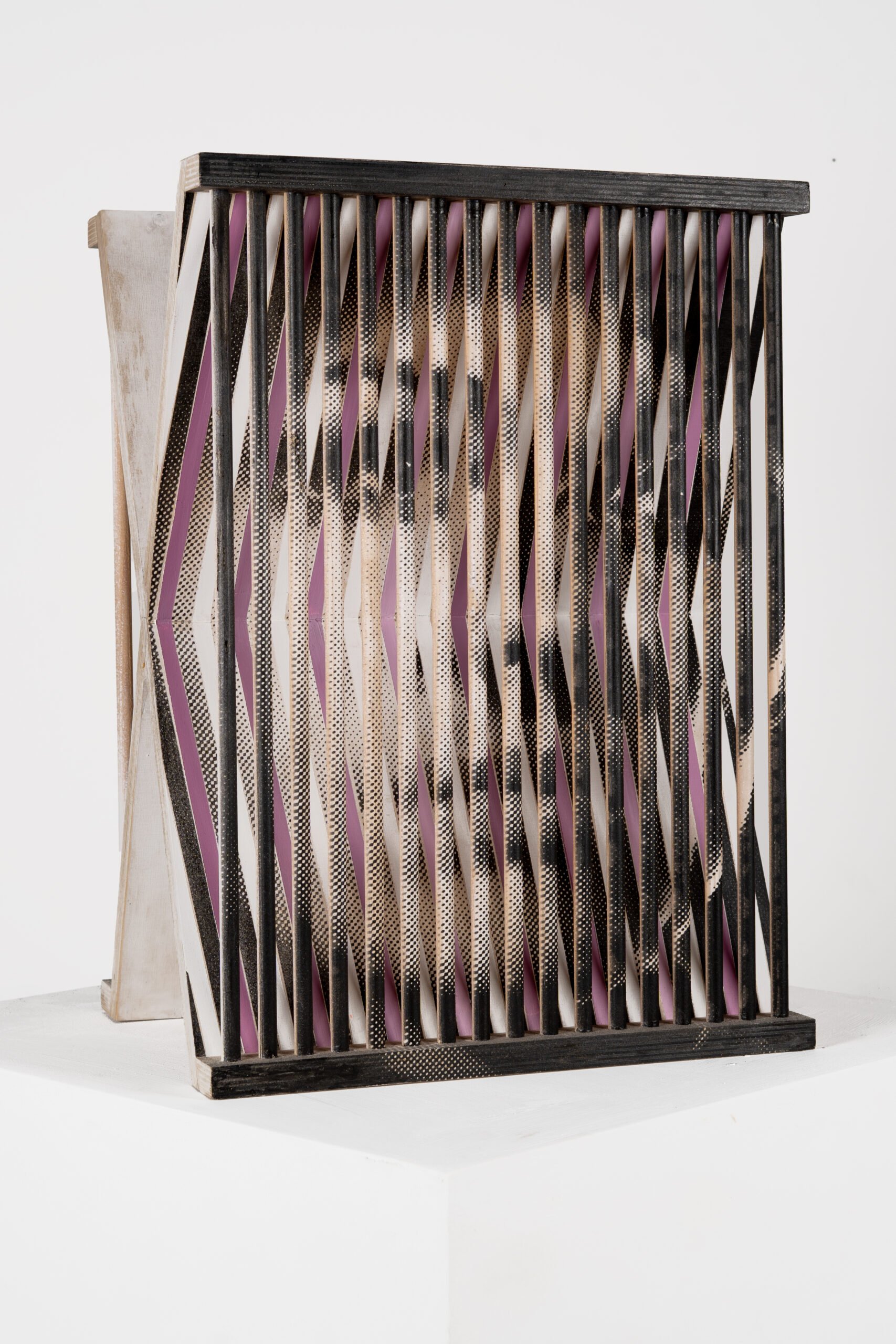
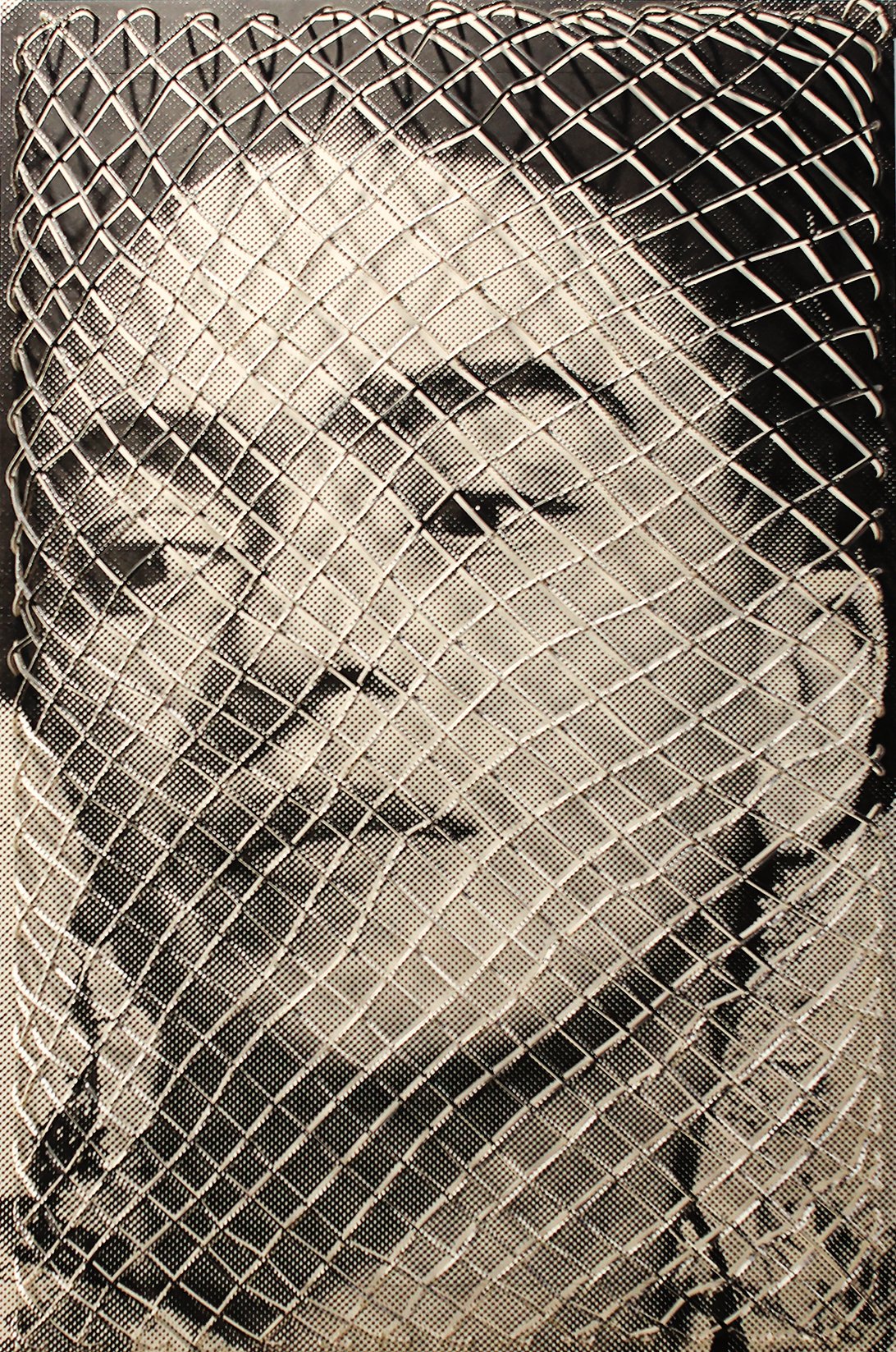
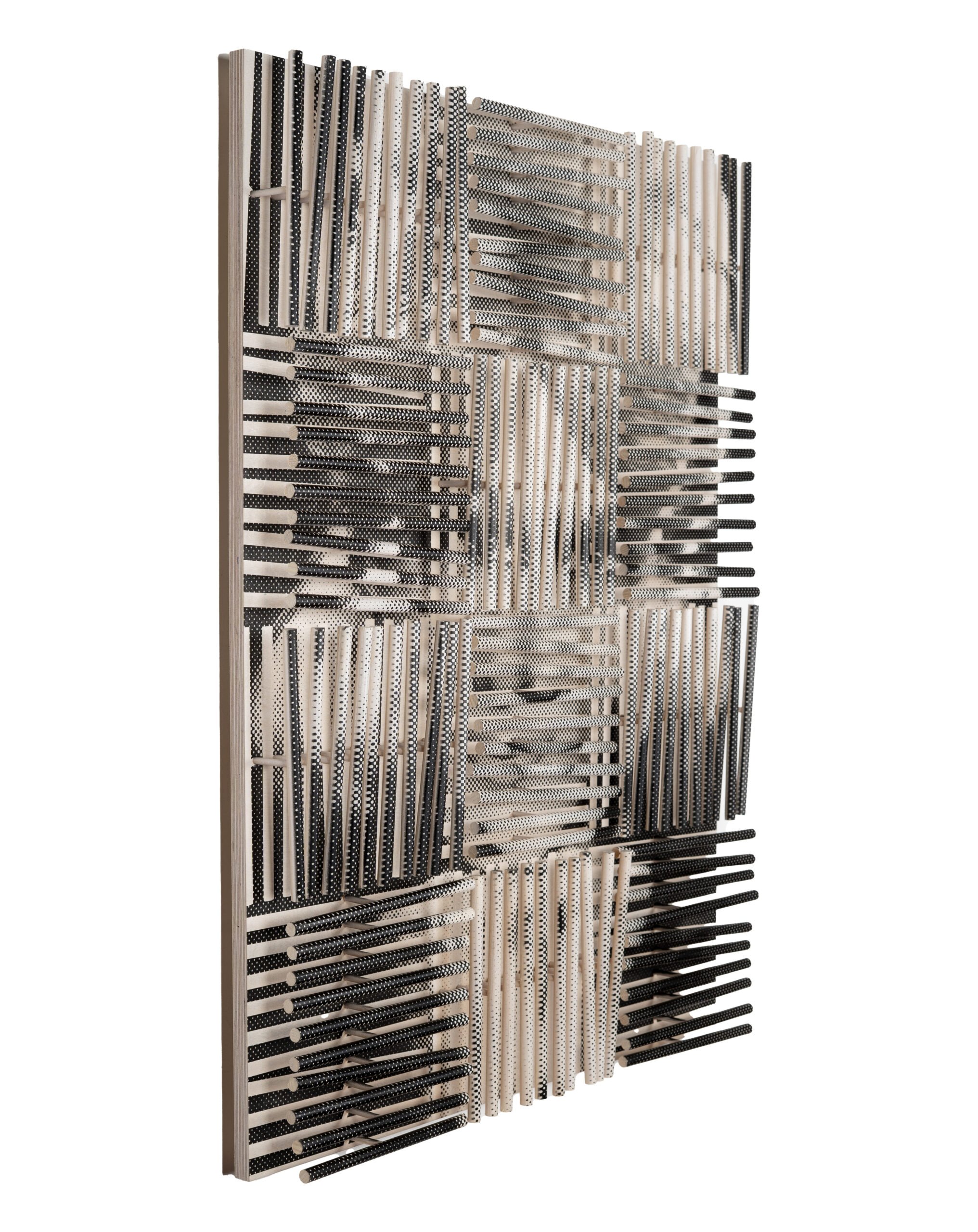
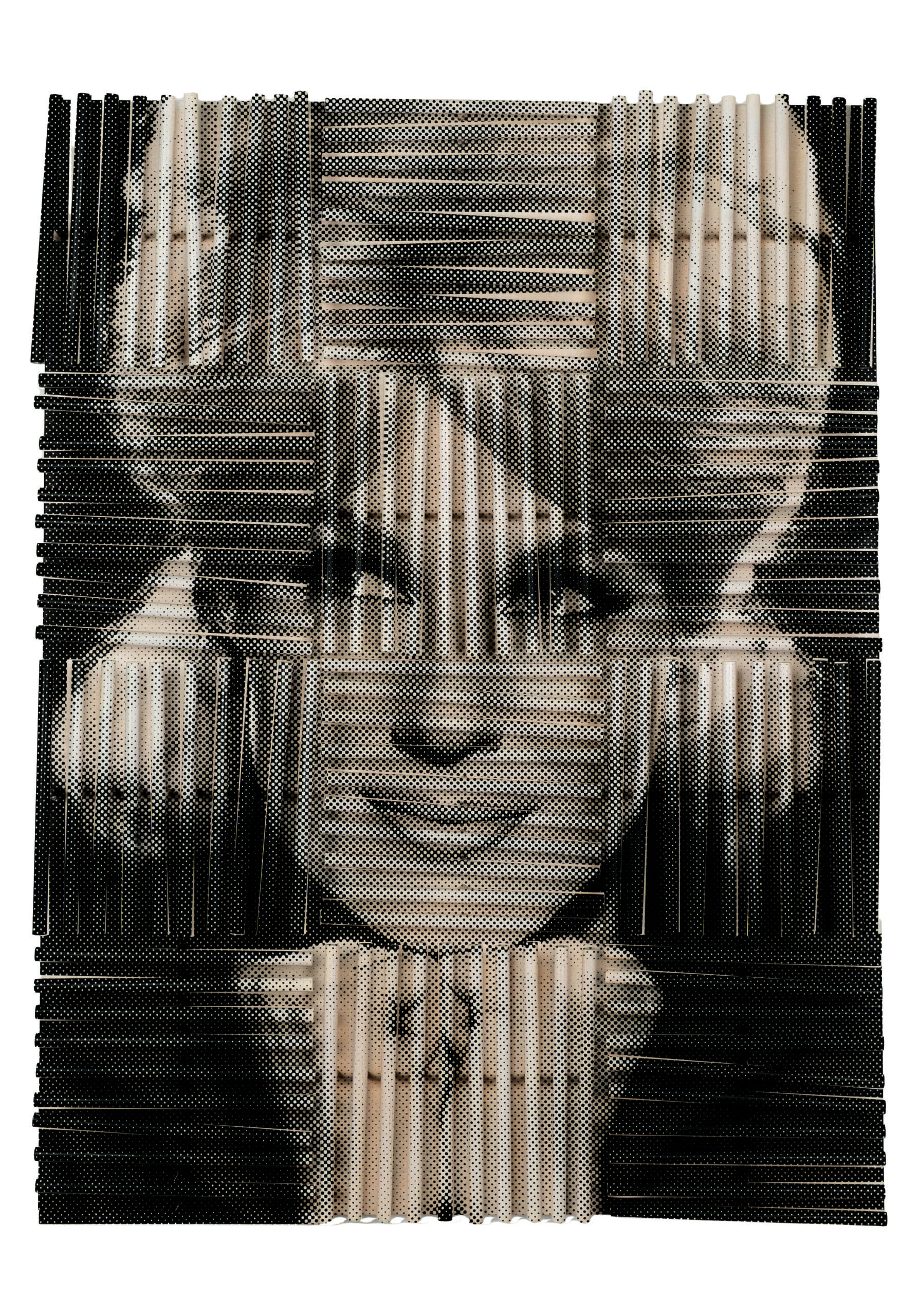
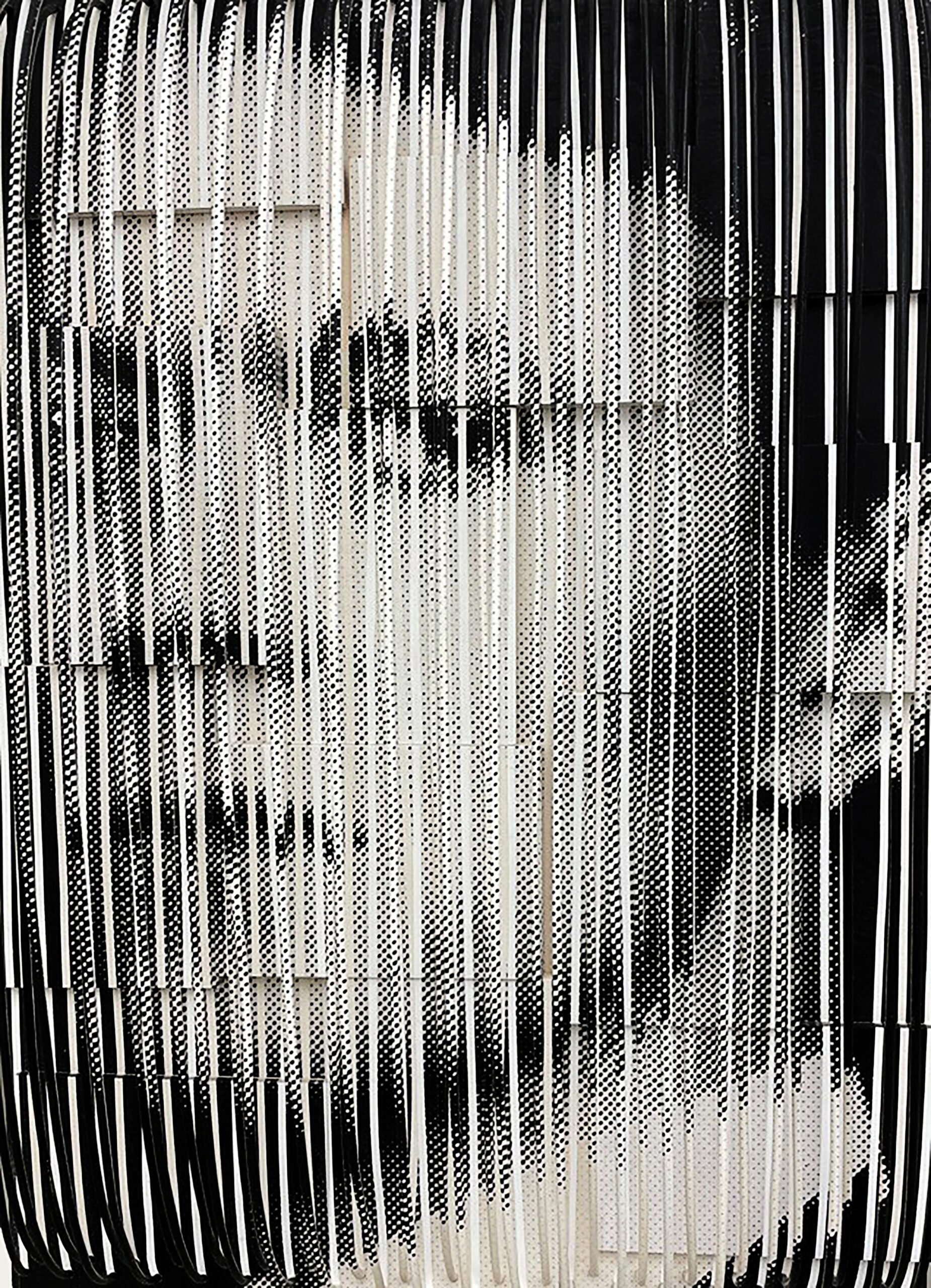
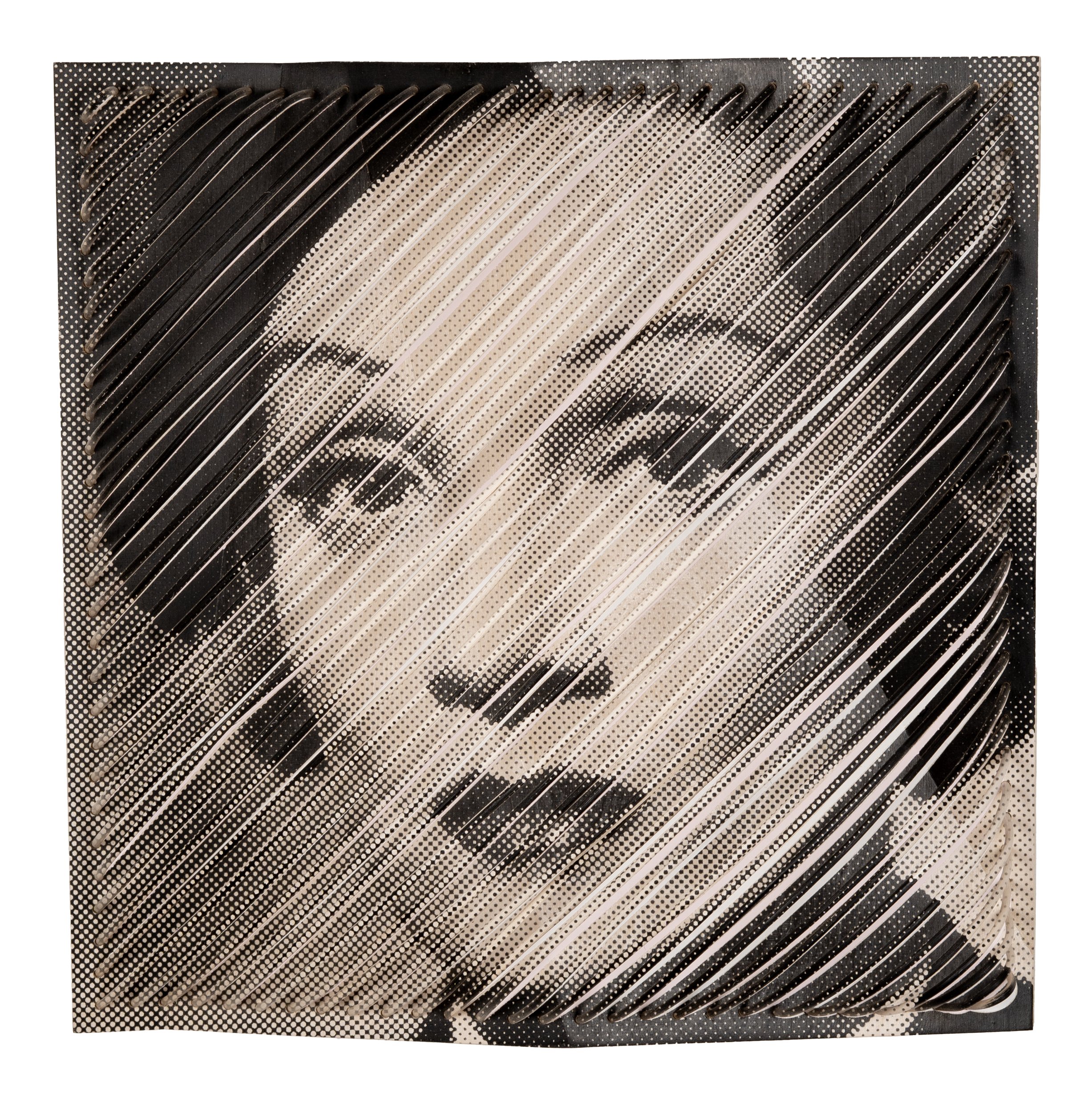
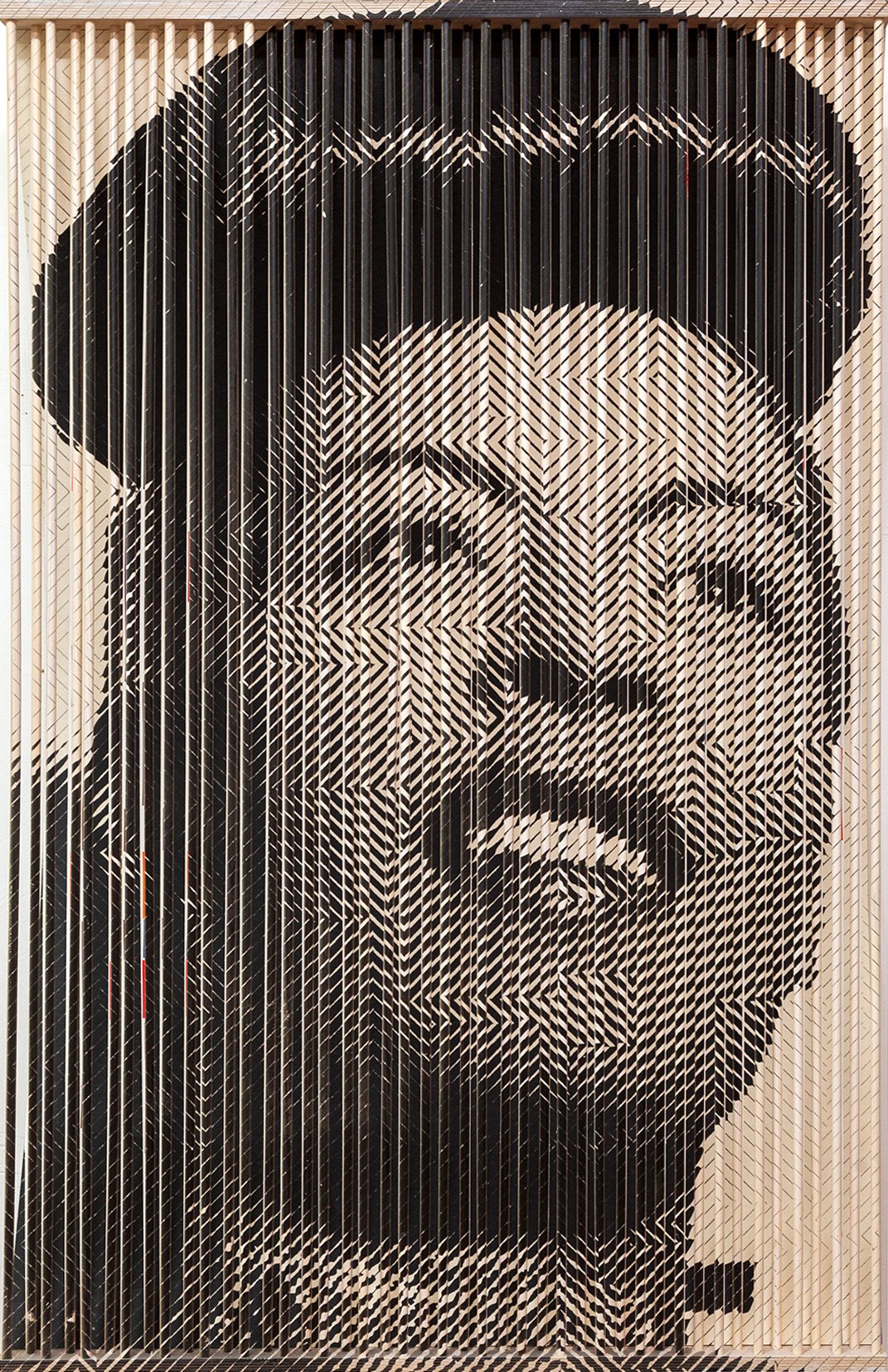
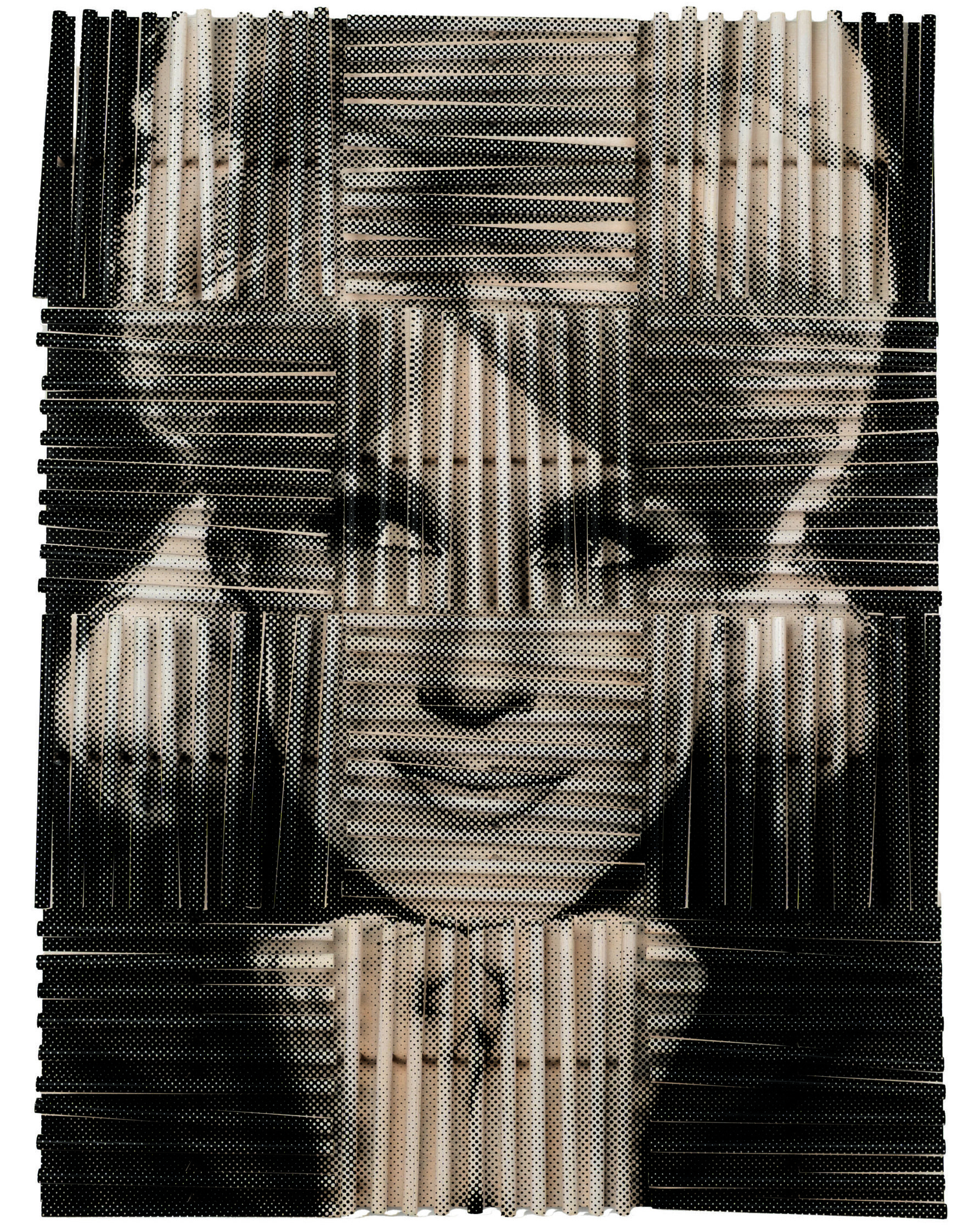
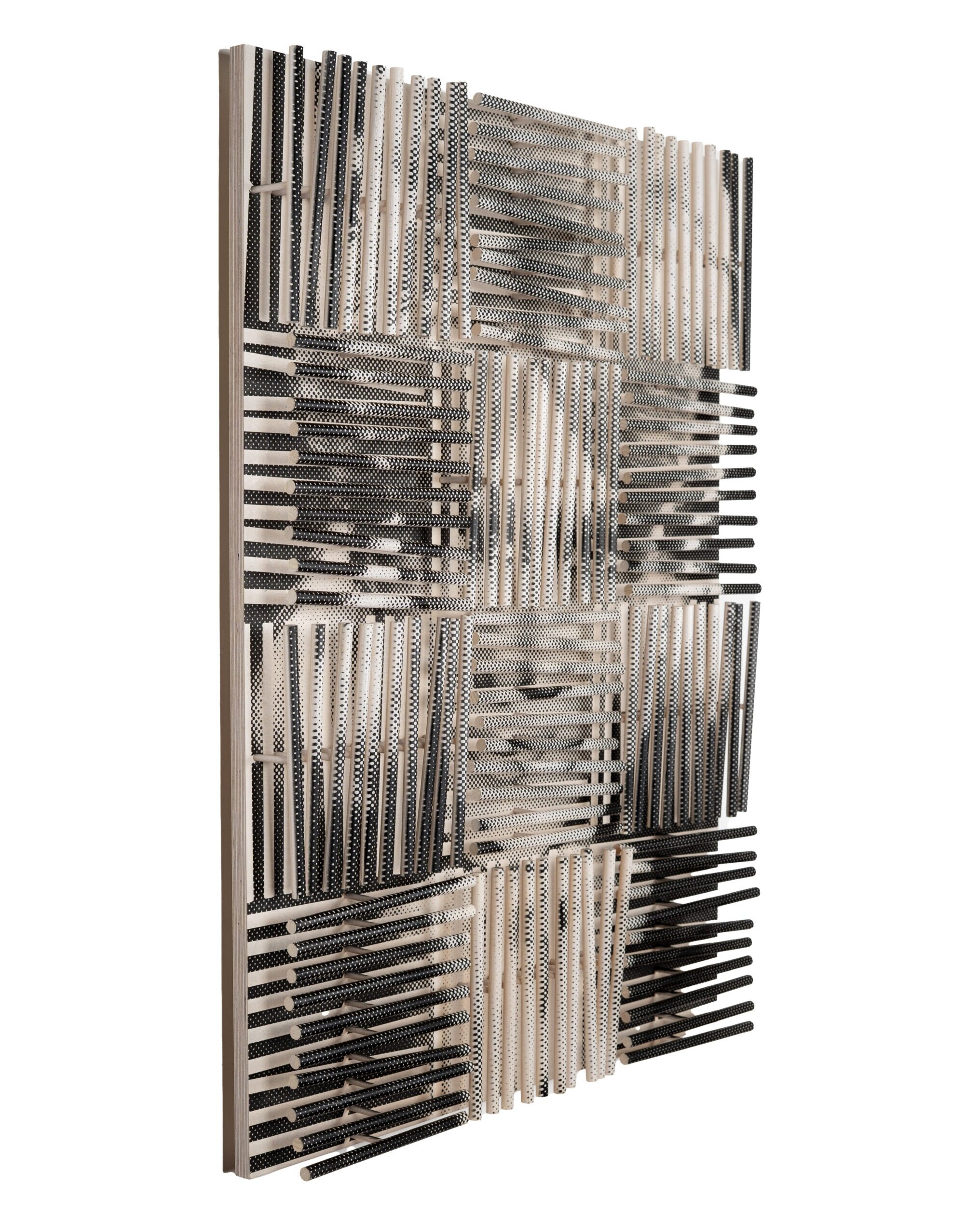
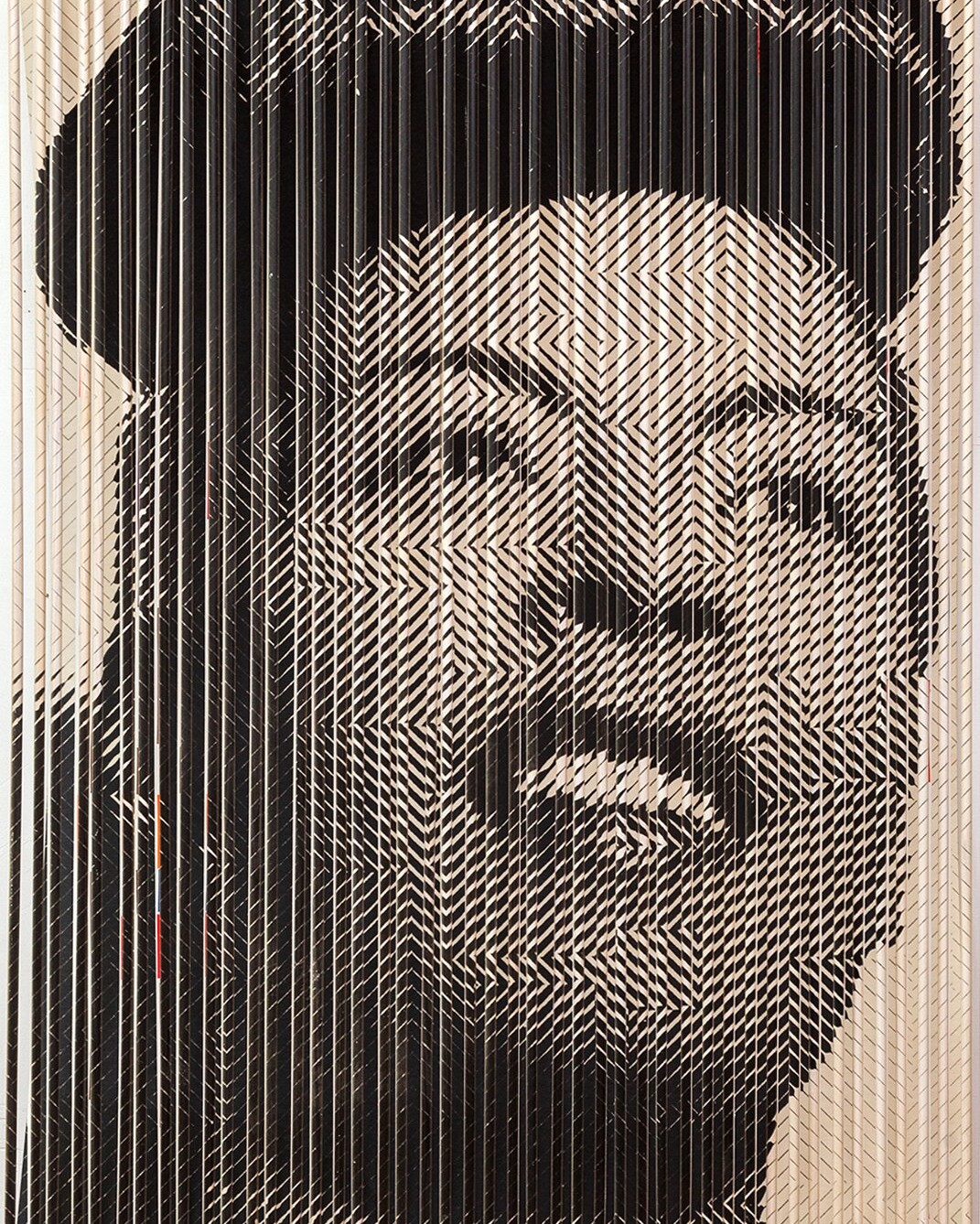
Ilse Haider subjects the thousands of published celebrity photos to a process of transformation and reinterpretation. The skillfully rehearsed poses of the models, the adjusted facial expressions, the cosmetically corrected attitude of the original photograph are transferred into a new sphere of perception: diagonally running, intersecting, densely interwoven lines alter the presence and coherence of the manipulated images.
The viewer's visual process is put to the test: from which position is the combination of image and rattan relief ideal? What distortions occur during the viewer's movement, what remains, what disappears?
Vision and movement
Normally, one is not aware that seeing eternity Movement is essential. Our eyes are constantly in motion, focusing on an object, circling it, zooming in or out, thus enabling the recognition and processing process. Habitually, inexplicable details and distracting obstacles are silently ignored – the eye wants to deliver something "recognizable." Ilse Haider offers the opposite approach: the focus of art appreciation is not on quickly ticking off familiar, media-transmitted famous faces, but on discerning more complex connections. As one walks past her photo-sculptures, the priorities of what is seen shift: sometimes one sees a structure of thin reed lattice and chiaroscuro, sometimes a perfectly illuminated, skillfully staged portrait behind a delicate outline. Change is the means with which the artist virtuously wields her image. She transforms a formerly intact image into a three-dimensional object, she alters the way we see it as if through a distorting mirror, and she imbues the image with vitality.
Images and icons
Ilse Haider calls her current exhibition "Icons." Icons of media history confront the viewer: the singer Billie Holiday—almost as famous for her spectacular appearance as for her jazz songs; the Mexican painter Frida Kahlo, who considered herself her most successful painting; Marlene Dietrich, eternally enigmatic and inscrutable—here her melancholic aura becomes palpable as if through a veil. The transformation of these media-staged portraits into the sculptural structure of Ilse Haider's art intervention counters the triviality and banality of countless star photos with something subversive and expansive. Icons become images, designed and inspired objects that originate from a photograph, but reinterpret and expand it: is the painter Frida Kahlo trapped within herself, within her beauty? What do you need to know about pop singer Dusty Springfield and her anti-apartheid protest when you encounter her sunny face presented behind grid structures?
One face – and more
The exhibition "Icons" brings together works by Ilse Haider from 2018 to 2026. Alongside celebrities from film and show business, the artist has always been interested in the "faces" behind well-known works, the ones that are less familiar. What did certain painters, philosophers, thinkers, or actors from films long since considered "outdated" look like? Ilse Haider is interested in the interconnectedness of physiognomy and work. Many an artist's pose reappears in their own oeuvre, many a singer interprets not only their songs but also themselves – in Ilse Haider's objects, these attitudes are dissected and strikingly accentuated.
The artist opens a new phase in her work with her piece on the philosopher Hannah Arendt, in which she juxtaposes a large-format portrait sculpture with a monochrome photograph. This serene, simple panel reflects the intellectual depth and unfathomable nature of the philosopher's being and, together with the strongly textured relief of the portrait, creates a diptych of meditative intensity.
Margit Zuckriegl